Types of Services for a Mother of a Newborn Baby
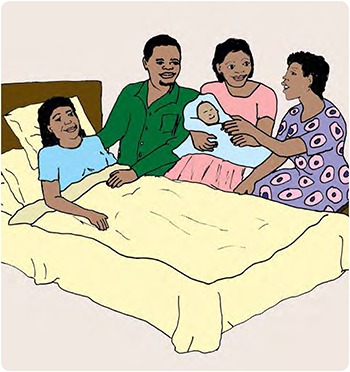
What is in this session?
In this session we review the primal information to be communicated to women who have just given nascence and their partners and/or families. This covers general care of both the female parent and the baby as well as danger signs in the postnatal flow. Special mention is made for supporting women with depression.This topic is used to practise the skills of facilitating family and grouping support and respecting the concerns of women. Meet Session 12 on birth spacing and postpartum family unit planning and Session 13 on breastfeeding which are too of import counselling topics for women and their families immediately afterwards nascency.
What skills will I develop?
-
Facilitating family and group support of women
-
Respecting the concerns of women
-
Providing data on postnatal care and danger signs in the new female parent and baby
-
Tailoring to the specific needs of the depressed postnatal adult female.
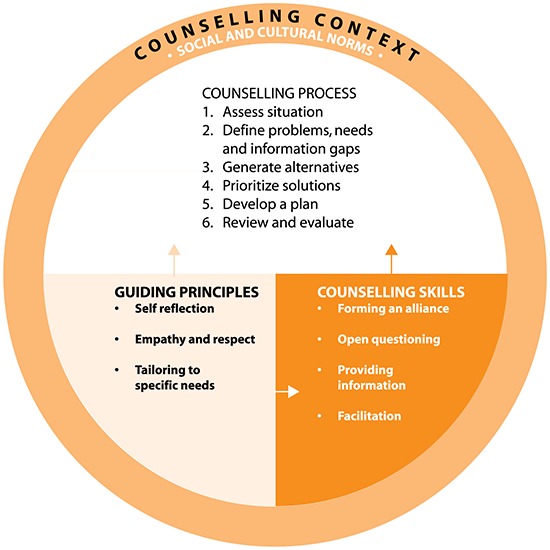
What am I going to acquire?
By the cease of this session you should exist able to:
-
Communicate key information on postnatal care including complications for the female parent and baby.
-
Provide support to women with depression.
Intendance of the mother and newborn after birth
Some women will give birth in the home with a skilled attendant; others may non have a skilled attendant present. Some women who give nativity in the facility will spend time there post-obit childbirth. WHO recommends that a women not be discharged before 24 hours subsequently nascence. Regardless of the identify of birth, it is important that someone accompanies the adult female and newborn for the first 24 hours afterward nascency to answer to any changes in her or her babe's condition. Many complications tin can occur in the showtime 24 hours. Following childbirth at home, it is important that the mother and babe receive a postnatal examination as early as possible, preferably within 24 hours of birth. If the birth was at a facility, mother and baby should receive a postnatal exam earlier discharge.
There are a number of of import points to discuss with the woman and her family following birth to ensure that the woman has adequate care. See the WHO PCPNC for additional information.
Important Problems TO DISCUSS WITH WOMEN AND THEIR FAMILIES, IMMEDIATELY Following Nativity
-
The importance of having someone nearby for the first 24 hours.
-
The importance and recommended timing of postnatal visits.
-
The importance of the new mother eating more than and healthier foods – discuss in the context of local practices and taboos to ensure women have admission to practiced nutrition. The new female parent should likewise drink plenty of clean, prophylactic water.
-
The importance of residuum and slumber and the demand to avoid hard concrete labour.
-
Discussion of normal postpartum haemorrhage and lochia – hash out with women how much blood loss they can look, for how long. When bleeding is more normal, they should seek care urgently.
-
Discuss the danger signs for the woman and baby and the importance of seeking aid rapidly.
-
Personal hygiene in the context of local practices and the environment. Discuss with women the type of pads they volition use and their disposal, and care of episiotomy in the context of domicile atmospheric condition. Hand washing is particularly important to foreclose infections. Information technology is also important not to insert annihilation into the vagina.
-
Talk to them about when they can resume sexual relations and the importance of prophylactic use to prevent STI and HIV manual (meet Sessions 12 and fourteen). Sexual intercourse should be avoided until the perineal wound heals. Hash out the importance of nascency spacing and counsel on the employ of a family planning method.
-
Discuss infant feeding and breast care (meet Session13) and the importance of only taking prescribed medicines when breastfeeding.
-
Discuss the importance of the home environment for promoting the health of the babe and recovery of the female parent. For example, hash out the need for warmth, skilful ventilation and hygiene for both mother and baby.
-
In an area with malaria, discuss the importance of mother and babe sleeping under an insecticide-treated bednet.
Timing of postnatal visits
Following childbirth the adult female and newborn should be examined inside 24 hours by a health worker. At this time likewise discuss with the adult female and family the timing of subsequent visits and the immunization schedule for the baby. WHO recommends that the mother and baby be visited at home by a trained health worker, preferably inside the offset calendar week after nascence. If your facility does non conduct out home visits, discuss with the mother how she will come to the facility or local clinic for these scheduled visits. These visits early on in the postnatal period are of import for the mother and baby. It is also an important opportunity to ensure the institution of breastfeeding and address any difficulties with zipper and positioning.
How to provide data and support for the care of the mother later on birth
The PCPNC provides a list of applied tasks that need to be carried out following birth, if you practice not have the PCPNC y'all should follow the norms and standards established in your facility. Explain the reasons backside the tasks yous are carrying out and discuss with the woman any advice or recommendations you have for her to ensure appropriate care in the home during the postnatal period (refer to the points higher up). Encourage her to ask questions during the test and utilise your active listening skills to reflect on and clarify what she is telling you. Assist her to think of ways she can implement your advice. Sometimes, when women are unsure or hesitant they voice concerns in an indirect way rather than directly raising an result. Be aware of her body language and the non-exact signs she may exist showing yous. Repeat back to her in different words what you think she is saying to see if y'all take understood. At the end of the postnatal examination, remind her that she can come to the health facility at whatever time if she has questions, reassure her and make sure she feels supported.
SCHEDULE OF POSTNATAL VISITS FOR Mother AND NEWBORN
View in ain window
| within i week, preferably on day 3 |
| vii-14 days after birth |
| 4-half dozen weeks later on birth |
Explain subsequent immunisation schedule
Sexuality issues
These visits are a adept fourth dimension to talk over sexuality issues. Often the adult female will come to encounter you or be on her own at home with the babe. This can give you more than privacy to discuss topics about which she may feel 'shy'. The timing of when a couple resume sexual relations afterwards childbirth is oft guided by local sexual practices. Dissimilar communities and religious groups have different suggested periods of abstinence after childbirth. It would be useful to exist aware of this and to be respectful of these practices. A woman is often embarrassed to ask when she can resume intercourse and may already be pressured past her husband or partner. In some cases, the partner may have had sexual intercourse outside the relationship during the flow of abstinence following childbirth and hence the woman may exist at risk of contracting STIs and HIV.

Brand women aware that a health worker may come for a home visit for postnatal care three days after nativity
Encourage women to return to the health facility with their newborn babies for routine health checks or if any danger signs are present
It is important to tell women virtually the changes to her torso after childbirth that may touch resuming sexual relations. The tiredness that many women feel after childbirth means that they often have petty desire for intercourse. The showtime time they have sex activity may be painful specially if they had stitches to their perineum. Damage and strain to their internal pelvic muscles which happens during childbirth will mean that sex may 'feel dissimilar'. Many women will need information most these normal changes and some reassurance that these things commonly ameliorate with time.
Providing adequate care in the home
In the firsthand weeks following childbirth women need actress intendance, including partner and family back up. Labour and childbirth are physically demanding, equally is breastfeeding and looking afterward a newborn baby. It is therefore very important that women regain their strength and maintain their health equally they adjust to life with their new baby.
Women in the postnatal menses demand to maintain a balanced diet, just equally they did during pregnancy. Atomic number 26 and folic acrid supplementation should as well continue for 3 months after birth. Women who are breastfeeding require additional food and should drinkable sufficient clean water. You should spend more fourth dimension on nutrition counselling with women who are very sparse and with adolescents who may need additional information to aid them become a counterbalanced diet. In some cases you may need to refer women to a nutrition counsellor, where available. It is important to note that poverty may prohibit women from accessing certain foods. Exploring less expensive options can be a helpful role of the counselling session.
COUNSELLING ON NUTRITION
-
Advise the woman to eat a greater corporeality and diverseness of good for you foods, such every bit meat, fish, oils, basics, seeds, cereals, beans, vegetables, cheese and milk to help her experience strong and well (give examples of how much to consume).
-
Reassure the mother that she can eat any normal foods - these volition not harm the breastfeeding baby.
-
Discuss any taboos that exist about foods which are nutritionally healthy.
-
Talk to her partner or other family members to encourage them to ensure that the adult female eats enough and avoids hard physical work.
The first few weeks with a new baby are very demanding, physically and emotionally. Women demand to residue and take intendance of themselves every bit they recover from labour and nascence. This often requires that other family members and friends aid out. Work with families to make sure anybody is aware of the care a mother needs. Use your questioning skills to find out whether women are looking after themselves and find out the level of support they are getting from their families. Find out if she is getting enough rest and support. Work with her to identify ways that this could be improved. The postnatal menses is a time when yous may accept to discuss issues with the family equally a whole to help them identify solutions to problems that may take arisen since the birth. Some women are overwhelmed following the nativity of a kid, but despite this they experience that they must get dorsum to their usual routine equally quickly as possible to show that they are coping. Equally a wellness worker, you need to be able to identify women who are coping, from women who are having problem coping.
During each postpartum visit you should besides discuss how breastfeeding is progressing (see Session thirteen). Also talk to women about any plans they accept to render to work or school, how this might affect breastfeeding and the care of the baby. Find out whether they take made whatsoever plans and review them together, or help them to make a plan if they exercise not already take one.
Danger signs for the woman
All women and their families need to be aware of danger signs during the postnatal period. Review the emergency plans they made during pregnancy and encounter whether they are still valid. Remind women to bring their maternal health record with them even for an emergency visit. It is important that y'all discuss danger signs with every adult female as the majority of maternal deaths occur in the first calendar week after birth. Consider making a tool or an assistance for women to take dwelling with them following birth.
POSTPARTUM DANGER SIGNS IN THE Adult female
She should go to the hospital or health centre immediately, day or night.
SHE SHOULD Not Look if she has whatever of the post-obit danger signs:
-
vaginal bleeding has increased
-
fits
-
fast or difficult breathing
-
fever and too weak to get out of bed
-
severe headaches with blurred vision
-
calf hurting, redness or swelling; shortness of breath or chest pain.
She should go to the wellness middle equally presently as possible if she has any of the following signs:
-
swollen, reddish or tender breasts or nipples
-
issues urinating, or leaking
-
increased pain or infection in the perineum
-
infection in the surface area of the wound (redness, swelling, pain, or pus in wound site)
-
evil-smelling vaginal belch
-
astringent low or suicidal behaviour (ideas, programme or attempt)
Depression
The nativity of a new baby tin lead to many emotional changes. Many women go through a period of mild depression post-obit the birth of a babe. There is a demand to differentiate betwixt postnatal 'dejection' (feeling down) which ordinarily occur in the first week and can last up to two weeks after nascence, and postnatal depression which is much more severe and usually lasts for a longer period. You may well have a local word for the mild depression or 'blues' that women feel following birth. Use this word when yous discuss the topic with women and their families to differentiate it from postnatal depression, which is dissimilar.
When the female parent experiences low energy, fatigue, sleep or appetite problems, then she may take postnatal dejection. Truthful postnatal low is when a woman is depressed considerably for more two weeks, plenty to disturb her routine activities. She may besides experience any of the post-obit:
-
persistent sad or broken-hearted mood, irritability
-
low interest in or pleasure from activities that used to exist enjoyable
-
difficulties carrying out usual work, school, domestic or social activities
-
negative or hopeless feelings near herself or her newborn
-
multiple symptoms (aches, pains, palpitations, numbness) with no articulate physical cause.
In addition she may exist suffering from guilt or accept negative feelings towards herself or her newborn. In some cases a woman may feel so depressed that she wants to end her life. If y'all identify a new mother with low so you lot should refer her as before long as possible to the nearest health care facility. Back up groups tin can likewise assist. If that is not possible then you may need to support her through this flow yourself. If possible, meet her on a regular basis and use your skills to testify empathy, listen to her and support her. Ask her consent to discuss with a family unit member or friend who she feels may too exist able to provide her with back up. Involve her in social activities and activities that used to make her happy in the by. If depression is mild, regular concrete do can assist a lot.
Supporting depressed women
Women who accept depression need emotional back up. Reassure them that this is usually a temporary condition that happens to some women who have given nativity. Information technology sometimes helps if women know that feeling depressed following the nascence of a infant is normal and many women experience these feelings. Endeavor and talk to the woman's family and explain to them the need for extra support at this time. Verify that she and the newborn are getting the care they need.
Some relatives and even sometimes health workers may non take the concerns of women they meet seriously. If women feel their concerns are not taken seriously, this may brand them feel inadequate as mothers, which will contribute to their low. Some mothers may not exist able to care for themselves or their baby properly. This is particularly true for women with special needs and adolescents in item. Under no circumstances should anyone verbally or physically corruption a female parent who is having problems caring for her baby.
Reflect on your own attitudes towards women who endure from the postpartum blues or a more severe form of sadness and low. Have y'all been able to be supportive of them? Do yous recollect this is a serious issue? How prevalent is it in your customs? What is the attitude of the customs towards women who are experiencing postnatal low? Discuss with some colleagues to get their impression about how many women may suffer from this. Interview some women who have recently given nascence and ask them if they accept felt any of the signs mentioned in the box on the previous page.
You can play a vital role in encouraging the partner and family unit to listen to the woman and to be sensitive to her condition. You lot can encourage them to offering applied and emotional support and to reassure her. Try to maintain regular follow-upwardly with women who are suffering from depression and their families, to ensure they are getting the support they need.
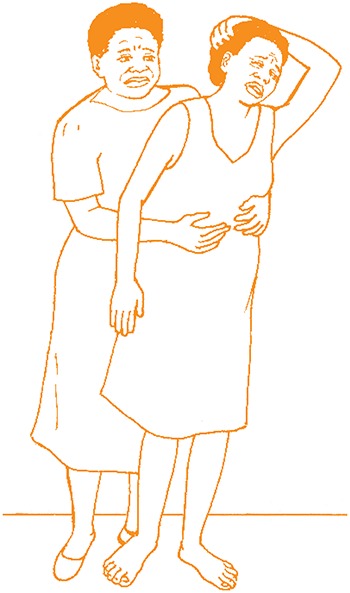
Offer practical and emotional back up to women who are suffering from depression after birth
Action 1
 1 hour
 To help you discover ways to support women who are experiencing depression or who require additional emotional support.
Although this activity is written in the context of depression following birth, there will be many other times when yous have to counsel depressed women or women who are feeling sad. Women with special needs may be more likely to experience periods of intense sadness or depression and may crave additional emotional support.
In addition you lot or your colleagues may likewise suffer from periods when you lot require extra back up and understanding every bit a consequence of the roles you have to play and the support you lot give to others. The tasks you behave out in this activeness can be used for all the women y'all see, as well as for your colleagues and yourself!
-
Write a listing of things that a woman can practice for herself to improve her mental health. For example, walking, resting and quiet time, spending time with friends, praying or singing songs.
-
Write a list of things that other family unit members can practise to support her, such equally helping out with the work load, sitting and listening to her, providing an environment of care and support.
-
Now write downwardly things that a group of women could exercise to assist improve their mental health. For example, giving ane another emotional or applied support or discussing issues and sharing solutions.
-
Practise whatsoever support groups currently exist in the community? How could you help women in your customs to start their own back up groups or to amend support each other?
-
Discuss the lists with colleagues and finalize them together. Distribute copies of the listing so you and your colleagues tin can apply them as a resource with women who are experiencing mental or emotional wellness issues.
-
In cases where depression is so severe that it does not respond to your interventions, are there more than specialized counsellors bachelor to whom yous can refer?
 Our View
Women often detect it beneficial to have a group of people with whom to discuss and share their problems and emotions. Some women become back up and reassurance from their partners and families just for others a group exterior the home might be more benign. Women can help one another retrieve through issues and generate options that help to solve these bug.
Find out if a support grouping exists, and build on this group. If none exist, you could commencement a new grouping but starting upwards a support group can be a difficult and time-consuming task. You could encourage new mothers to consider forming a group. Provide suggestions for what they might discuss and help them set ground rules for privacy and confidentiality.
REMINDER
If the mother suffers virtually of the time and cannot function normally, neglects herself and/or the baby, you need to refer her to more than specialized help. Health workers or counsellors trained to treat depression can offering more advanced psychosocial treatments or if this does not piece of work, they can prescribe some medication, or refer to mental wellness specialists.
If there is a take a chance of self damage, or the female parent is having thoughts about suicide it is of import that she gets urgent assistance and support and is not left alone. Remove means of self harm and assign someone to ensure her safety while you adjust specialist mental health intendance.
ENCOURAGE WOMEN TO Practise THINGS FOR THEMSELVES THAT THEY Savour SUCH As
-
coming together a friend
-
getting out of the habitation or walking, or things which help them to allow their feelings out
-
singing, drawing or writing
-
spiritual relief through prayer
-
meditation
Support the woman in whatsoever fashion you tin can. This may include a home visit and/or extra postpartum appointments. Encourage her partner and family to support her practically and emotionally.
How to provide data and back up for the care of the newborn after nativity
In improver to physically assessing the newborn, you volition need to be able to communicate effectively with the mother, male parent and family to assess how the newborn is doing. You need to provide practical guidance and support for breastfeeding (see Session 13) every bit well every bit information on string care and other care in the home for the baby.
As you lot ask the female parent questions, retrieve to use simple, appropriate language. Treat any concerns she raises about her baby or her part equally a mother with respect, even if her worries might announced unnecessary to y'all. You lot should maintain her trust at this time so that she volition come to you when she has other concerns, which you may consider more serious. All mothers (but especially first time mothers) need lots of support and reassurance that they are caring for their babies appropriately. Y'all can communicate some of this information by active demonstration, for example, showing the new mothers how to agree or elevator a baby, so that they tin come across what to do, and giving them opportunities to inquire questions and clarify whatever problems.
REMINDER
It is important to provide mothers, fathers and families with practical advice on how to care for the baby during the start few days.
-
Keep the babe warm - a babe should wear one-ii layers more than an adult. If common cold, put a hat on the infant's caput.
-
Care for the umbilical string. Do non put anything on the stump.
-
Proceed the babe make clean. Information technology is not necessary to wash the infant every twenty-four hour period, merely wash babe's face and bottom when needed. Brand certain the room is warm when undressing baby.
-
Provide goose egg but breast milk day and night.
-
Y'all should see a health worker on day 3 and between vii and xiv days and 4-6 weeks after birth. At the 6 week visit the baby will be immunized.
-
Let the baby sleep on his/her back or side.
-
Proceed the babe away from smoke.
-
Information technology is not recommended to expose the baby to direct sun.
Some women may demand actress support with a item issue such as breastfeeding. Women may too want information or support most whatever problems that their babies accept. Recollect when an issue is raised the first thing y'all should practise is notice out how much the adult female already knows and what she is already doing – many times she is doing the right things and only needs reassurance. If there are problems which she identifies, follow the counselling procedures you take been practising to help her place possible solutions. Together with her, counterbalance the advantages and disadvantages of solutions and put together a program of activeness that she feels she is able to bear out.
At this fourth dimension y'all may too want to review any local practices that families may want to comport out with the baby. Discuss with them the consequences of some practices which may be harmful (Review the list of harmful, harmless and helpful practices you developed in Session four Activity 1).
Danger signs for the newborn
In add-on to advising parents and the family on general care of the newborn, it is important to alert them to danger signs.
As for the mother, in that location are as well danger signs for the newborn that mothers and families need to identify and respond to immediately. Think about how to discuss and review this data with families. Consider obtaining or developing support materials, which will help you to communicate this data more than finer and that will aid women and their families to call up the danger signs.
DANGER SIGNS FOR THE NEWBORN
Suggest the mother and family to seek intendance immediately, day or night. They should not wait if the infant has whatsoever of these signs:
-
difficulty in breathing or indrawing
-
fits
-
fever
-
feels cold
-
bleeding
-
not feeding
-
yellow palms and soles of feet
-
diarrhoea
The mother and family should go to the health middle equally before long as possible if a baby has whatever of the following signs:
-
difficulty feeding (poor attachment, not suckling well)
-
is taking less than eight feeds in 24 hours
-
pus coming from the optics or skin pustules
-
irritated cord with pus or blood
-
yellow eyes or skin.
-
ulcers or thrush (white patches) in the mouth - explicate that this is different from normal chest milk in the mouth
When explaining the danger signs to parents and caregivers, when possible show them what you are describing. Use the baby as a visual aid and for case, testify them the normal breathing, prove them where pustules might announced, or where the redness of string infections will be seen. Accept some time to find normal feeding patterns, techniques and positioning and discuss the almost common difficulties they are likely to experience.
REMINDER
Suggest families on the importance of birth registration. Consider making a list or instructions on where and when to become that yous can requite to families.
Newborn babies with special needs
A baby who had difficulties breathing at the fourth dimension of birth and needed resuscitation should be carefully monitored over the side by side 24 hours, with particular attention to the danger signs in the newborn. For these babies information technology is specially of import that they are kept warm and that extra attention is paid to the initiation of breastfeeding. These babies may have some difficulties in starting to breastfeed and the mother and baby might demand more than support. Information technology is too of import to explain to the parents of the baby what happened at the time of birth and the possible consequences of their babe not starting to breathe by him/herself, such every bit developmental delays.
Some babies are born very pocket-sized, either considering they have been built-in before nine months, or because their growth was restricted in the uterus. Mothers who are very young; who are expecting twins; who are involved in hard physical work during pregnancy; or who are over- or underweight, anaemic or have suffered from malaria or some other infection during pregnancy; are at greater risk of giving birth before time or giving nascence to a low birth-weight baby. Low birth-weight babies or babies built-in under 2500 gs are at greater risk of infections and dying. Brand sure the parents of depression nascence-weight babies are aware of the danger signs in the newborn and know to seek assistance quickly. In particular, low birth-weight babies may take difficulties with breastfeeding. Encounter Session 13 on breastfeeding for further information on how to back up the mother of a low birth-weight babe to breastfeed.
Low nascency-weight babies tin be cared for using Kangaroo Mother Care. The Kangaroo Mother Intendance: Practical guide published past WHO (http://www.who.int/reproductivehealth/publications/maternal_perinatal_health/9241590351/en) gives further information on how to initiate Kangaroo Mother intendance in hospital. Kangaroo mother care involves peel-to-skin contact betwixt female parent and baby and exclusive breastfeeding. It allows the mother and babe to bond, while also keeping baby warm and able to breastfeed oft.
Action 2
1 hour
To practice your skills at counselling new mothers
This is a role-play activity. If you are non working through the Handbook with a group, effort to find two colleagues who can aid you with this role-play If you are part of a group, take turns playing the role of the new mother and the wellness worker.
This action will build on some of the skills you lot proficient in Activeness 2 in Session nine. Remember to:
-
maintain eye contact, where culturally appropriate, nod and smile at appropriate times
-
demonstrate open body language
-
demonstrate empathy and respect through understanding/caring language
-
exercise not sound harsh or judgemental, despite your ain beliefs and values, or the fourth dimension constraints of your task
-
enquire open up-ended questions and listen actively
-
practise not requite straight advice, but explore what the female parent already knows
-
paraphrase questions back to check understanding
-
build on the mother'southward knowledge, then she can best appoint in a solution.
Accept some fourth dimension to discuss the reasons mothers come to the health facility with their newborn. Make a list of possible scenarios. The person playing the female parent can choose one and start the role play. For example:
-
A young mother brings her 2-calendar week quondam baby to the clinic with an infected umbilicus. Her mother-in-constabulary had insisted it was necessary to apply a poultice to the cord.
-
An boyish female parent brings her 1-calendar week old babe in with a very mild rash, but really she wants to find out nigh family unit planning, as her boyfriend is pressuring her to resume sexual relations.
-
A mother with 4 children and a new infant comes in lament of fatigue. She looks lamentable, overwhelmed and she has been crying.
-
A mother comes in for a routine cheque-upwards at 6 weeks. She is very sparse and weak.
Retrieve of other scenarios that you take encountered in your work, or that might occur in the customs and setting you are working in.
The person doing the counselling should also consider:
What open questions you can apply to plant two-way communication and put the mother at ease?
Have you explored what information technology is about the mother's situation that prevents her from addressing her and her baby's needs?
Take you lot avoided using judgemental questions?
Have you reflected back what the mother said and built on her knowledge?
What information can you requite her and how can yous work with her to find a solution?
One participant should observe the role-play S/he volition comment afterwards on what the person playing the health worker did well and make suggestions on how to meliorate the counselling session in future. Try to point out what was skillful in the counselling session and then make some suggestions most what could be improved next fourth dimension.
What did I learn?

You should exist able to communicate the essential messages relating to intendance of the female parent and the newborn in the abode after nascence. You have learned the danger signs in the postnatal period for the adult female and newborn and thought most how best to communicate these to women and their families. You take also learned how to care for and back up women who are experiencing depression and how to mobilize support from families, communities and other women in similar situations. Call back, that often we ourselves may need support later providing emotional support to others. Some of the aids discussed here may be of utilize to you and your colleagues.
To help yourself, remember to reflect on what you are doing and how you are feeling. Have time for yourself to recharge your batteries, particularly if you have been through an emotional or stressful experience at work. Use your notebook to record your thoughts and feelings and share these with a trusted colleague if yous think that will assist, or identify other things you can do for yourself. Remember, an exhausted, unhappy health worker is unlikely to exist able to provide the care and back up the woman or family need.
Source: https://www.ncbi.nlm.nih.gov/books/NBK304191/

Post a Comment for "Types of Services for a Mother of a Newborn Baby"